
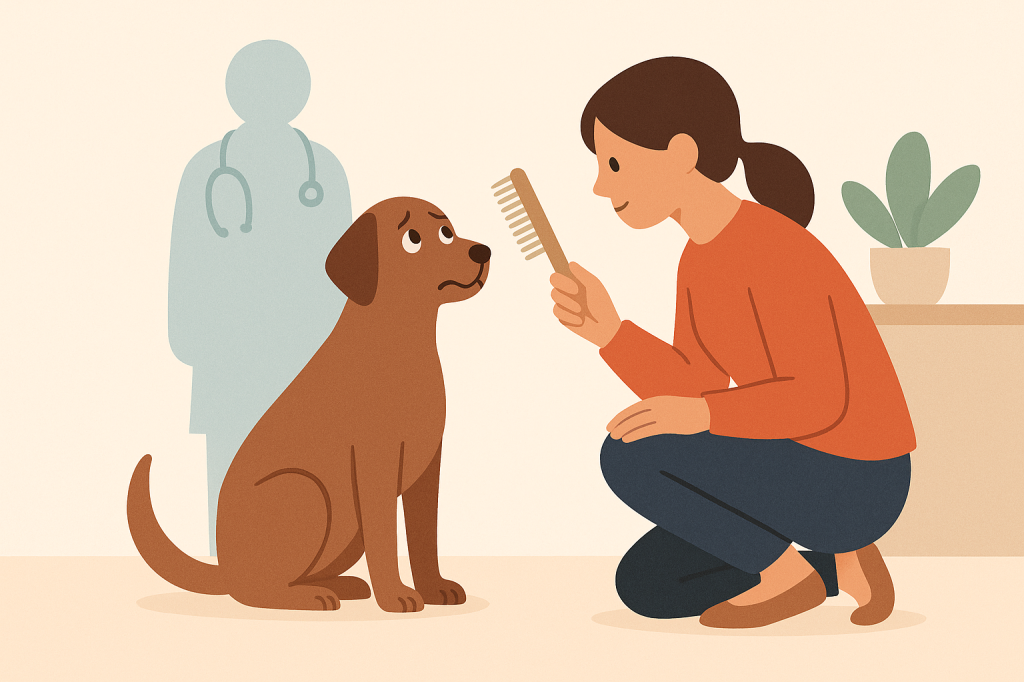
Understanding and Tackling Vet or Grooming Fear in Dogs
As a dog owner, it's common to encounter situations where your pet feels anxious or fearful, particularly during visits to the vet or grooming appointments. This article aims to provide a calming overview of these fears and practical steps you can take to help your dog feel more comfortable.
What is Vet or Grooming Fear?
Vet or grooming fear refers to the anxiety that some dogs experience in anticipation of visits to the veterinary clinic or grooming salon. This fear can manifest in various ways, including hiding, excessive barking, whining, or even aggressive behaviour. For both the owner and the dog, such situations can be stressful.
Why Does It Happen?
Several factors can contribute to a dog's fear of the vet or grooming. Past negative experiences, such as painful procedures or rough handling, can lead to a dog associating these places with distress. Additionally, dogs have heightened senses, making them sensitive to unfamiliar smells, sounds, and environments. Fear can also develop if a dog is not adequately socialised during its formative months.
Practical Steps to Help Your Dog
- Desensitisation: Introduce your dog to the vet and grooming environment gradually. Visit the clinic or salon for short periods without any procedure taking place. Allow your dog to explore and sniff around.
- Positive Reinforcement: Use treats and praise when your dog remains calm in these settings. This helps create positive associations with the experience.
- Practice Handling: At home, gently handle your dog’s paws, ears, and mouth, which can help them get comfortable with being touched and examined.
- Consult Professionals: If your dog’s fear is severe, consider consulting a professional dog trainer or behaviourist who can provide tailored strategies.
- Calm Environment: Use calming aids such as pheromone diffusers or anxiety wraps to help soothe your dog before a visit.
Expected Timelines for Improvement
Each dog is unique, and the time it takes to overcome fear varies. Some dogs may show improvement within a few sessions, while others may take several weeks or months. Consistency and patience are key. Regular visits without stressful procedures can help build your dog's confidence over time.
Frequently Asked Questions
1. How can I tell if my dog is scared?
Common signs include shaking, hiding, excessive barking, and resisting being handled. Look for changes in behaviour that signal discomfort.
2. Should I force my dog to go in?
Never force your dog into a situation they fear. This can reinforce their anxiety. Instead, encourage them with patience and rewards.
3. Can medication help with my dog's anxiety?
Consult your veterinarian if you believe medication may be suitable for your dog’s anxiety. They can provide guidance and proper assessment.
Are you looking for help with your dog training needs? Our Dog Assistant helps with daily checkin reminders specifically tailored to your dog's needs and breed. If you have a problem related to "Vet or grooming fear issues" then give us a try!
Create your free account today!
Written by ClientSlot's Dog Training Expert on: 2025-12-30 12:01:04 Topic: Vet or grooming fear
Helpful Dog Training Articles
We have a small selection of guides which you might find helpful
Comfort | Separation Anxiety | Walking & Lead | Fear & Anxiety | Obsessive Behaviours | Training & Focus | Social Skills & Play | Calm & Settle | Arousal & Impulse | Recall | Separation & Sitters | Manners & Greeting | Handling & Touch | Resource Guarding | Barking | Food & Scavenging | Reactivity | Vet & Grooming | Travel & Car | Escaping & Boundaries | Destructive - Outdoor | Mouthing & Chewing | House Training |© 2026 ClientSlot. All rights reserved.