
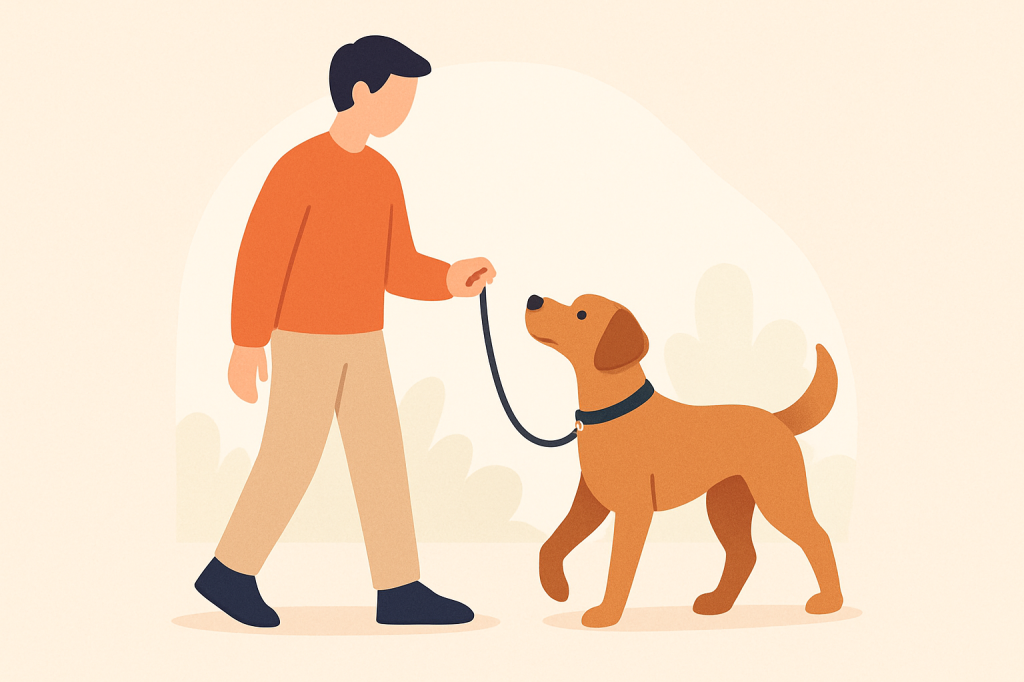
Master Loose Lead Walking with Simple Techniques
Many dog owners experience challenges with their pets pulling on the lead during walks. This common issue can make outings stressful and uncomfortable for both you and your dog. Understanding why your dog pulls and learning techniques to encourage loose lead walking can transform your walking experience.
Understanding the Issue
Pulling on the lead often occurs because dogs are exploring their environment, excited to meet other dogs or people, or simply learning that pulling gets them where they want to go. It can be a behavioural response to anxiety or eagerness, and it’s important to note that your dog is not being stubborn or disobedient.
Practical Steps to Achieve Loose Lead Walking
Here are some simple techniques to help your dog learn to walk on a loose lead:
- Use Positive Reinforcement: Reward your dog with treats and praise when they walk beside you without pulling. This encourages them to make the connection between walking calmly and receiving rewards.
- Choose the Right Equipment: A well-fitted harness or collar can help in managing your dog’s pulling. Avoid using harsh equipment that can cause discomfort.
- Practice Attention-Getting Techniques: Teach your dog to focus on you by using their name, a clicker, or a favourite toy. Practice this at home before going out.
- Start Indoors or in a Quiet Area: Begin practicing loose lead walking in a familiar, low-distraction environment. Gradually introduce more challenging places as your dog improves.
- Changing Direction: If your dog starts to pull, change direction. This helps them learn that pulling away from you will result in a change of pace, making them pay attention to you instead.
- Be Patient and Consistent: Training takes time. Aim for short, positive sessions and gradually increase their duration as your dog improves.
Expected Timelines
Every dog learns at its own pace, so be prepared for variations in progress. Some dogs may grasp loose lead walking within a few weeks, while others might take a few months. Consistency and patience are key to success.
Frequently Asked Questions
What if my dog becomes distracted by other dogs? Train in an environment with fewer distractions before gradually adding them back in while practicing.
Can I use treats all the time? Gradually wean off treats as your dog improves, using intermittent rewards to maintain good behaviour.
Is loose lead walking important? Yes, it promotes a better walking experience for both you and your dog and helps to build a positive bond.
Are you looking for help with your dog training needs? Our Dog Assistant helps with daily checkin reminders specifically tailored to your dog's needs and breed. If you have a problem related to "Master Loose Lead Walking with Simple Techniques issues" then give us a try!
Create your free account today!
Written by ClientSlot's Dog Training Expert on: 2026-01-03 14:16:39 Topic: Master Loose Lead Walking with Simple Techniques
Helpful Dog Training Articles
We have a small selection of guides which you might find helpful
Comfort | Separation Anxiety | Walking & Lead | Fear & Anxiety | Obsessive Behaviours | Training & Focus | Social Skills & Play | Calm & Settle | Arousal & Impulse | Recall | Separation & Sitters | Manners & Greeting | Handling & Touch | Resource Guarding | Barking | Food & Scavenging | Reactivity | Vet & Grooming | Travel & Car | Escaping & Boundaries | Destructive - Outdoor | Mouthing & Chewing | House Training |© 2026 ClientSlot. All rights reserved.