
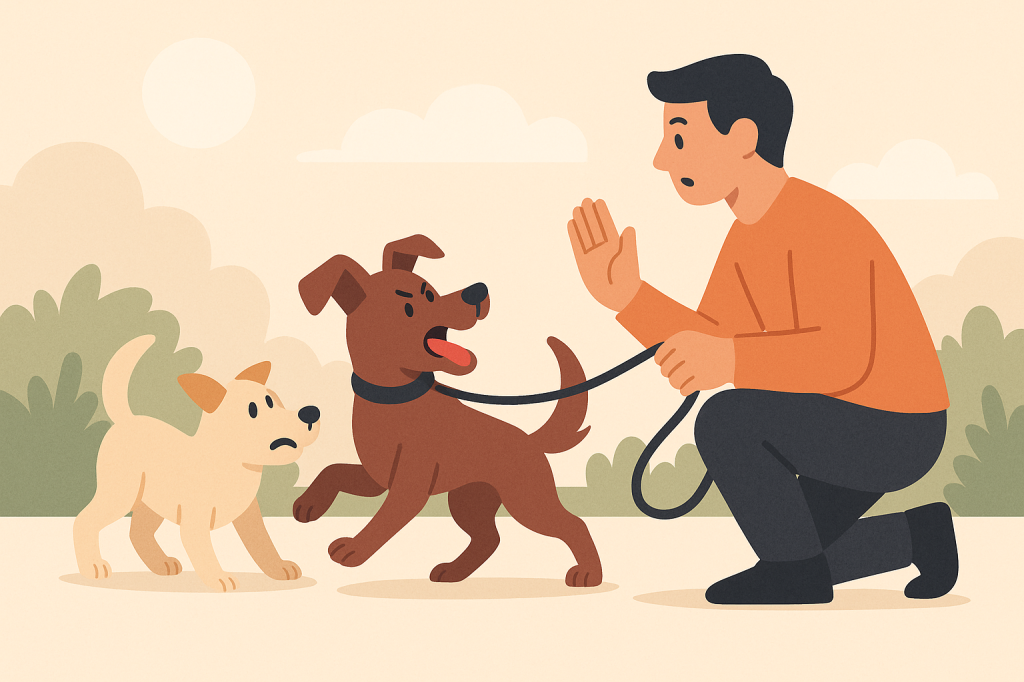
Inappropriate Play with Other Dogs
As a dog owner, it can be distressing to witness your dog engaging in what you deem inappropriate play with others. This guide aims to provide reassurance, insights into these behaviours, and practical steps to help you manage them effectively.
Understanding Inappropriate Play
Inappropriate play between dogs can manifest in various forms, such as overly aggressive behaviour, excessive mounting, or one dog bossing the other around. These behaviours often result from excitement, anxiety, lack of socialisation, or misunderstandings about play among different dog personalities.
It is important to recognise that not all dogs play the same way. Some may exhibit rougher play styles that can overwhelm more sensitive dogs, leading to disputes or stress. Understanding the nuances of canine communication is key to addressing these interactions.
Practical Steps to Manage Play
Observe and Assess
Take the time to observe your dog in play scenarios. Notice their body language as well as that of the other dog. Look for signs of discomfort, such as tucked tails or pinned ears.
Interrupt When Necessary
If you see your dog becoming too boisterous or aggressive, intervene calmly. Use a firm but gentle voice to call your dog away and redirect their attention to you.
Teach Alternative Behaviours
Consider training your dog to respond to cues, such as ‘leave it’ or ‘come’, that signal them to disengage from inappropriate behaviour and focus on you instead.
Choose Suitable Playmates
Ensure that your dog plays with suitable companions. Regular interaction with well-socialised dogs can help train your dog on appropriate play behaviour.
Limit Playtime
Establish structured playtimes with breaks. Limiting the duration of play can help reduce overstimulation and ensures that your dog remains calm.
Expected Timelines
Modifying play behaviour typically requires patience. You may begin to see improvements within a few weeks of consistent training and observation. However, deeper behavioural changes may take several months, depending on the individual dog's temperament and prior experiences.
Frequently Asked Questions
What if my dog doesn't respond to redirection?
Remain calm and try redirecting with a favourite toy or treat. It may take time for your dog to learn the new behaviour.
Should I stop my dog from playing altogether?
Not necessarily. The goal is to channel their energy into appropriate play. Gradual guidance is key.
How can I tell if my dog is uncomfortable during play?
Watch for signs like snapping, growling, or fleeing. These can indicate your dog is not enjoying the interaction and may need a break.
Are you looking for help with your dog training needs? Our Dog Assistant helps with daily checkin reminders specifically tailored to your dog's needs and breed. If you have a problem related to "inappropriate play with other dogs issues" then give us a try!
Create your free account today!
Written by ClientSlot's Dog Training Expert on: 2025-12-31 02:13:19 Topic: inappropriate play with other dogs
Helpful Dog Training Articles
We have a small selection of guides which you might find helpful
Comfort | Separation Anxiety | Walking & Lead | Fear & Anxiety | Obsessive Behaviours | Training & Focus | Social Skills & Play | Calm & Settle | Arousal & Impulse | Recall | Separation & Sitters | Manners & Greeting | Handling & Touch | Resource Guarding | Barking | Food & Scavenging | Reactivity | Vet & Grooming | Travel & Car | Escaping & Boundaries | Destructive - Outdoor | Mouthing & Chewing | House Training |© 2026 ClientSlot. All rights reserved.